The Hồ Chí Minh Mausoleum is one of the most important historical landmarks in Hanoi, Vietnam. Standing solemnly in the heart of the capital, this monumental structure honors Hồ Chí Minh, the founding father of modern Vietnam. More than just a memorial, the mausoleum represents the deep respect and gratitude of the Vietnamese people toward the leader affectionately known as “Uncle Ho.”
A Historic Location: Ba Đình Square

The mausoleum is located in Ba Đình Square, a site of immense national significance. It was here, on September 2, 1945, that President Hồ Chí Minh proclaimed Vietnam’s independence, marking the birth of the Democratic Republic of Vietnam. Thousands gathered in the square to witness this historic declaration, forever linking the location with the nation’s struggle for freedom.
Today, Ba Đình Square remains a ceremonial and political center where important national events take place. The vast open space, lined with green lawns and orderly pathways, enhances the solemn and dignified atmosphere of the mausoleum.
Architectural Grandeur and Symbolism
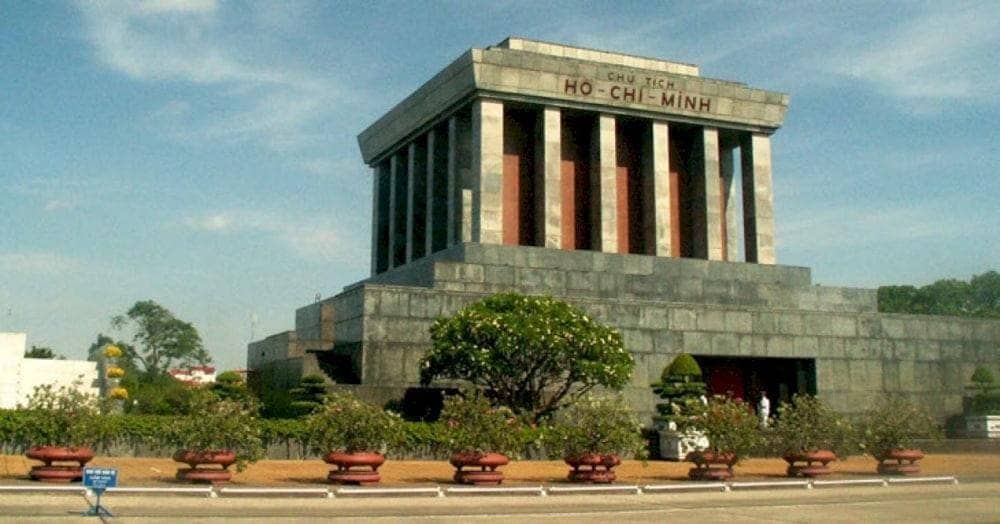
Constructed between 1973 and 1975, the mausoleum reflects a blend of Vietnamese and Soviet architectural influences. Its design is inspired partly by Lenin’s Mausoleum in Moscow, yet it incorporates distinctly Vietnamese elements, such as the use of local granite and marble.
The structure rises approximately 21 meters high and is built with strong, angular lines that convey stability and permanence. The exterior is engraved with the words “CHỦ TỊCH HỒ CHÍ MINH” (President Hồ Chí Minh), reinforcing the building’s commemorative purpose. The imposing gray stone façade creates an atmosphere of solemn reverence befitting a national hero.
Inside the Mausoleum
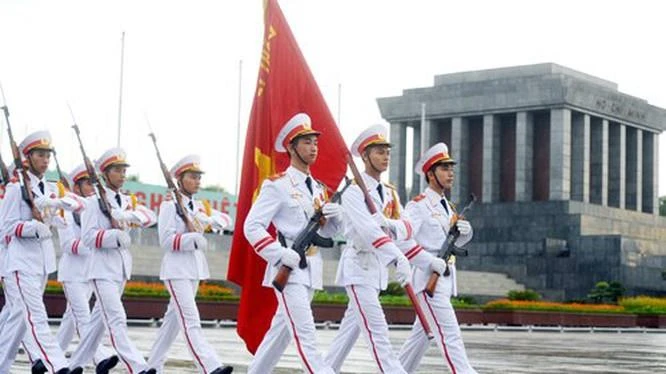
Inside the mausoleum, the embalmed body of Hồ Chí Minh is preserved in a glass case under controlled conditions. Visitors move quietly in a single line, guided by uniformed guards, to pay their respects. Photography, talking, and casual behavior are strictly prohibited.
The atmosphere is calm and reflective. Soft lighting and the presence of honor guards at each corner of the chamber add to the sense of dignity and respect. For many Vietnamese citizens, visiting the mausoleum is both an emotional and patriotic experience.
Surrounding Attractions

The mausoleum complex is surrounded by beautifully maintained gardens, palm trees, and additional historical sites. Nearby attractions include the Presidential Palace, Hồ Chí Minh’s Stilt House, and the One Pillar Pagoda. Together, they form an important cultural and historical complex that attracts millions of visitors each year.
The carefully landscaped grounds offer a peaceful contrast to the bustling streets of Hanoi, making the area both a place of remembrance and quiet reflection.
Visiting Information
The mausoleum is typically open in the mornings and closed on Mondays and Fridays, though schedules may vary seasonally. Visitors are required to dress modestly (no shorts, sleeveless tops, or hats) and maintain respectful behavior throughout the visit.
Because of its significance, the Hồ Chí Minh Mausoleum remains one of the most visited landmarks in Vietnam. It stands not only as a tribute to a revolutionary leader but also as a powerful symbol of independence, unity, and national pride.